

The political crisis in Hungary
The president of Hungary has rejected the prime minister's demand to resign, sparking a fierce political showdownbetween the country's old and new leadership. Magyar, whose sweeping electoral victory overturned former prime minister Viktor Orbán, had set a deadline for Sulyok's departure for midnight on Sunday (31/5/2026). In a five-minute video message on Facebook, the country's president invoked what he described as his loyalty to domestic and European constitutional rules, which—as he claimed—compel him to remain in his position. The removal of the head of state would pave the way for the complete dissolution of the self-proclaimed "state" built by Orban during his 16-year tenure. "The office of head of state compels me to remain," stated Sulyok, pointing to the president's constitutional role of acting as an institutional counterweight and check on the executive branch. He also added that he is ready to cooperate with the Magyar government to promote the interests of Hungary.
Magyar's victory
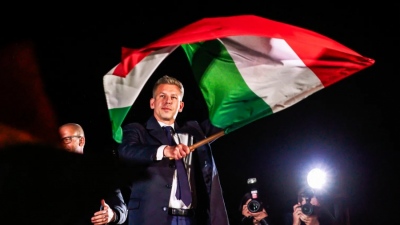
Magyar won the April 12 elections with a landslide majority, promising to dismantle Orban's increasingly authoritarian and corrupt system. During the election campaign, he pledged to remove Orban's loyal allies, including Sulyok, as well as top judges and prosecutors. His party, TISZA, secured a crushing two-thirds majority in Parliament, which allows it to amend the Constitution at will. Magyar was quick to point out the irony in the president's message, as he had remained silent while Orban further consolidated his power over the past two years — threatening judges, civil society workers, and journalists with imprisonment in a Russian-style crackdown. "Tamas Sulyok never defended those in need, nor those who were attacked, nor the rule of law," Magyar stated in a Facebook post following Sulyok'smessage.
The role of the president
In Hungary, executive power belongs to the prime minister. The president, who is elected by parliament for a five-year term, has a largely ceremonial role, although the head of state can refer laws back to parliament for reconsideration or refer them to the Constitutional Court for review. Orban had sought to shield Sulyok months before the elections by moving his trusted former prosecutor general to the presidency of the Constitutional Court and giving the judiciary the power to reject the removal of the head of state by parliament. Sulyok's term runs until 2029. However, these changes are unlikely to offer substantial legal protection against Magyar's parliamentary supermajority, which allows his party to amend the Constitution — something Magyar stated will be done immediately if Sulyok does not resign.
www.bankingnews.gr











Σχόλια αναγνωστών